Why Slow Travel Is Reshaping How We Experience Mountain Regions
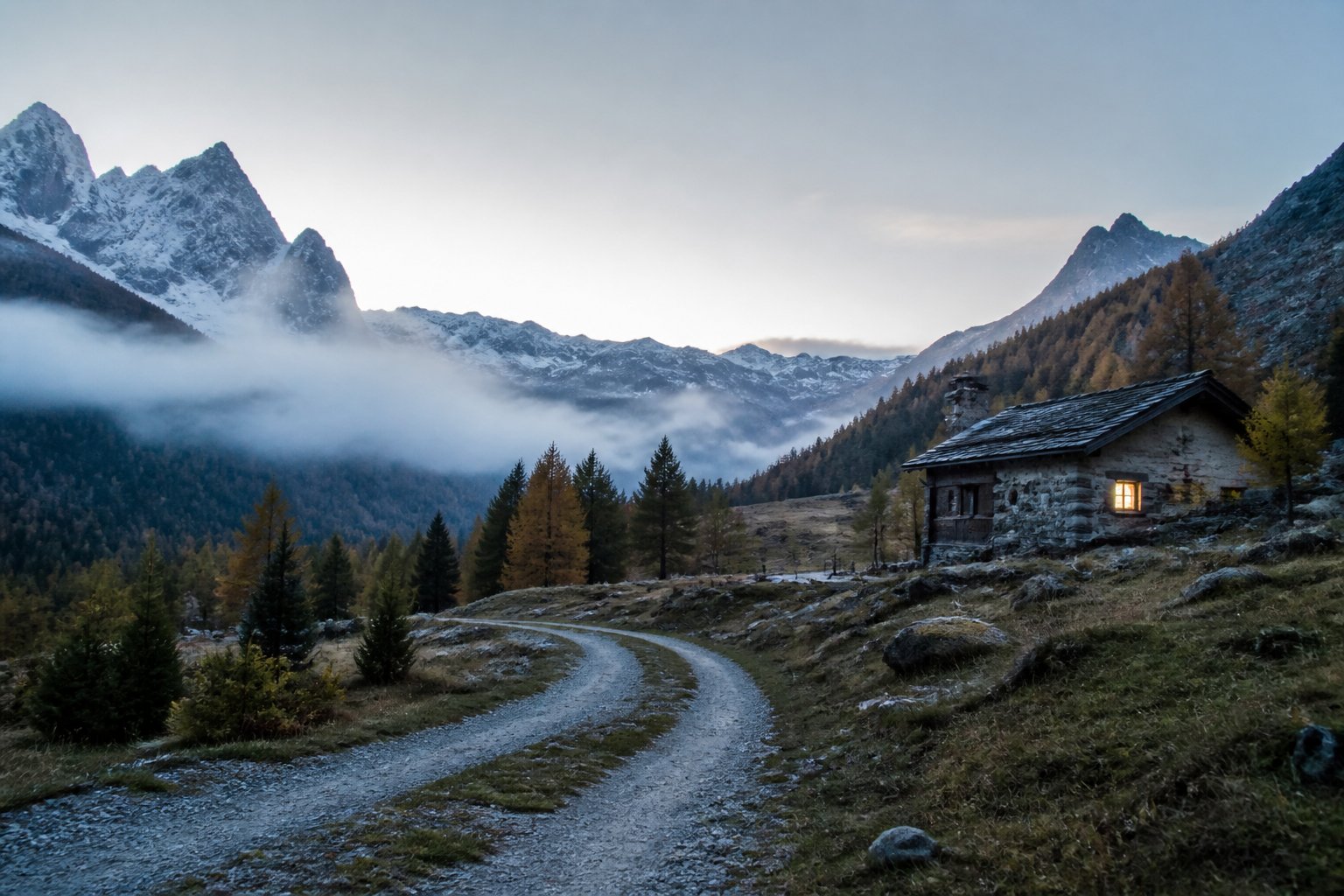
The chairlift at Champéry was running half-empty for most of last winter. That sounds like bad news for a Swiss ski village, and the local tourism office said so out loud in February. But the empty chairs were not the result of fewer visitors. Total bed-nights in Champéry actually ticked up slightly compared to 2024. The visitors were simply spending less time riding the lifts and more time staying put.
It is one small data point, and a single resort cannot make a trend. But Champéry is part of a broader pattern showing up across alpine and high-elevation regions, from the Dolomites to Patagonia to the Wasatch range. The classic mountain holiday – the long-haul flight, the rental car, the three or four sites checked off in a week – is being replaced, slowly, by something different. Visitors are staying longer, moving less, and spending more time with the place than around it.
What slow travel actually looks like in mountain regions
“Slow travel” is a slippery phrase. It has been attached to everything from train holidays to retreat centers. In a mountain context, the working definition that’s emerging is more specific. A slow traveler in this sense stays a minimum of seven nights in one location, uses local transport rather than a rental car, and spends most days within a 20-kilometer radius of their base. They cook at least half their meals. They tend to return to the same area in subsequent years.
Operators in the South Tyrol have been tracking this profile since 2022. The regional tourism board there started segmenting bookings by length of stay and transport mode, and a clear pattern has emerged. The longer the stay, the lower the per-day environmental footprint, and – this is the part that surprised the planners – the higher the total spend in the local economy. Long-stay visitors eat in more restaurants, buy more local food at markets, and book more guided activities than the equivalent number of short-stay visitors generating the same bed-night count.
That last point is what has tipped some regional planners away from pure visitor-cap thinking and toward stay-length incentives. The math is simple. If you cut total visitor numbers by 30 percent but the remaining visitors stay twice as long and spend 60 percent more locally, the region comes out ahead on every measure that matters: emissions, congestion, and revenue.
The trail-running economy
A specific subgenre of slow travel has emerged around trail running, and it is unusually instructive. The classic competitive trail race – the multi-day ultra in the Alps or the Rockies – pulls in international visitors who fly in, race, and fly out, often within four days. The carbon footprint per visitor is high. The local spend is concentrated in two restaurants and a single hotel.
Smaller, lower-key trail running gatherings have begun displacing these races in some valleys. The model is a week of organized but uncompetitive runs led by local guides, with rest days for recovery, regional food, and visits to working farms. Capacity is intentionally limited – usually 30 to 50 runners per week – and bookings often fill a year in advance. A handful of operators in the Pyrenees and the Eastern Alps now report that this segment is their highest-margin business, despite serving fewer people than a single race weekend.
The economics work because the runners stay seven to ten days, eat almost every meal locally, and tend to return. They also generate almost no overflow into ecologically sensitive areas, because the routes are planned in cooperation with regional park staff. A planner in Andorra described the model as “what regulated tourism was supposed to look like all along.”
Bus networks doing quiet work
One of the underappreciated drivers of this shift is regional bus infrastructure. In the past decade, several alpine regions have rebuilt their public transport systems around the assumption that visitors might not have cars. The Bernese Oberland’s integrated rail-and-bus pass, the Dolomiti Bus network in northern Italy, and the regional bus system in Slovenia’s Triglav region have all expanded service significantly since 2020. Most of these networks are now genuinely usable by visitors – frequent, on time, and well-signed in multiple languages.
That infrastructure changes the calculation for would-be slow travelers. A week in the Engadin without a rental car was, twenty years ago, an exercise in compromise. Today it is comfortable. A visitor staying in Sils Maria can reach the south side of Maloja Pass, the trailhead at Pontresina, and a half-dozen alpine lakes without ever touching a car. The friction is low enough that the slow option becomes the default, not the heroic exception.
The cap question
The harder conversation in mountain regions is about caps. Visitor caps – on parking, on lift tickets, on park entry – are politically difficult and rarely popular with the businesses that get caught on the wrong side of the line. Yet a growing number of mountain communities are introducing them, and the slow-travel pattern is part of the justification.
The argument runs as follows. If the region’s goal is durable economic value rather than peak-season throughput, capping certain pressure points actually helps. A cap on summit access at the Tre Cime di Lavaredo, for example, pushes visitors toward longer stays and quieter trails. The total visitor count falls; the average length of stay rises; the total spend stabilizes. It is not a guaranteed outcome, but the evidence from caps introduced between 2020 and 2024 is reasonably consistent.
The places where caps have not worked are the ones where the cap was imposed without parallel investment in the slow-travel infrastructure. Lift caps without good local transit just push visitors to drive elsewhere. Entry caps without nearby village amenities push people to come for the photograph and leave. The most successful caps have been bundled with better buses, better trail networks for non-summit days, and clearer information about what visitors can do when their lift slot is not until Wednesday.
What the next few years probably look like
The trajectory is not uniform, and there are still plenty of mountain regions chasing the high-volume model. The cruise-style sky bridges, the helicopter sightseeing flights, the four-summit-in-a-day packages – these remain commercially viable, and in some places they are still growing. But the regions that have committed to the longer-stay model are not retreating. They are deepening the investment.
For visitors, the implications are practical. Booking windows are getting longer. Stays of less than five nights are increasingly hard to find in the most regulated valleys. Rental car bookings near major alpine villages are tighter than they were in the early 2020s, partly because parking is more constrained. And the kind of trip that involves seeing six valleys in a week is becoming, simply, harder to organize.
What replaces it is not exactly minimalist. A slow trip to the Alps in 2026 still involves cable cars and high-mountain meals and the occasional dramatic photograph. It just unfolds over more days, in a smaller radius, with a higher chance that the visitor will know the names of the people pouring their coffee. That is not a dramatic transformation. It is a recalibration. And it appears to be working better than what came before, for the places involved and probably for the people visiting them.

About Maya Bennett
Maya Bennett is an independent writer covering sustainability, climate innovation, outdoor culture, and the evolving relationship between technology and everyday life. Her work focuses on how modern communities adapt to environmental change through smarter design, conscious living, and emerging technologies. Over the past decade, Maya has contributed to publications and digital media projects focused on environmental awareness, travel, wellness, and future living trends. She is particularly interested in sustainable cities, regenerative tourism, clean technology, and the growing intersection between nature and innovation. When not writing, she spends time exploring coastal destinations, hiking trails, and conservation-focused communities around the world. Her reporting combines research-driven insights with a practical perspective on how environmental and technological shifts influence daily life.