Forest Bathing Has Outgrown the Trend Label – Here’s What’s Next
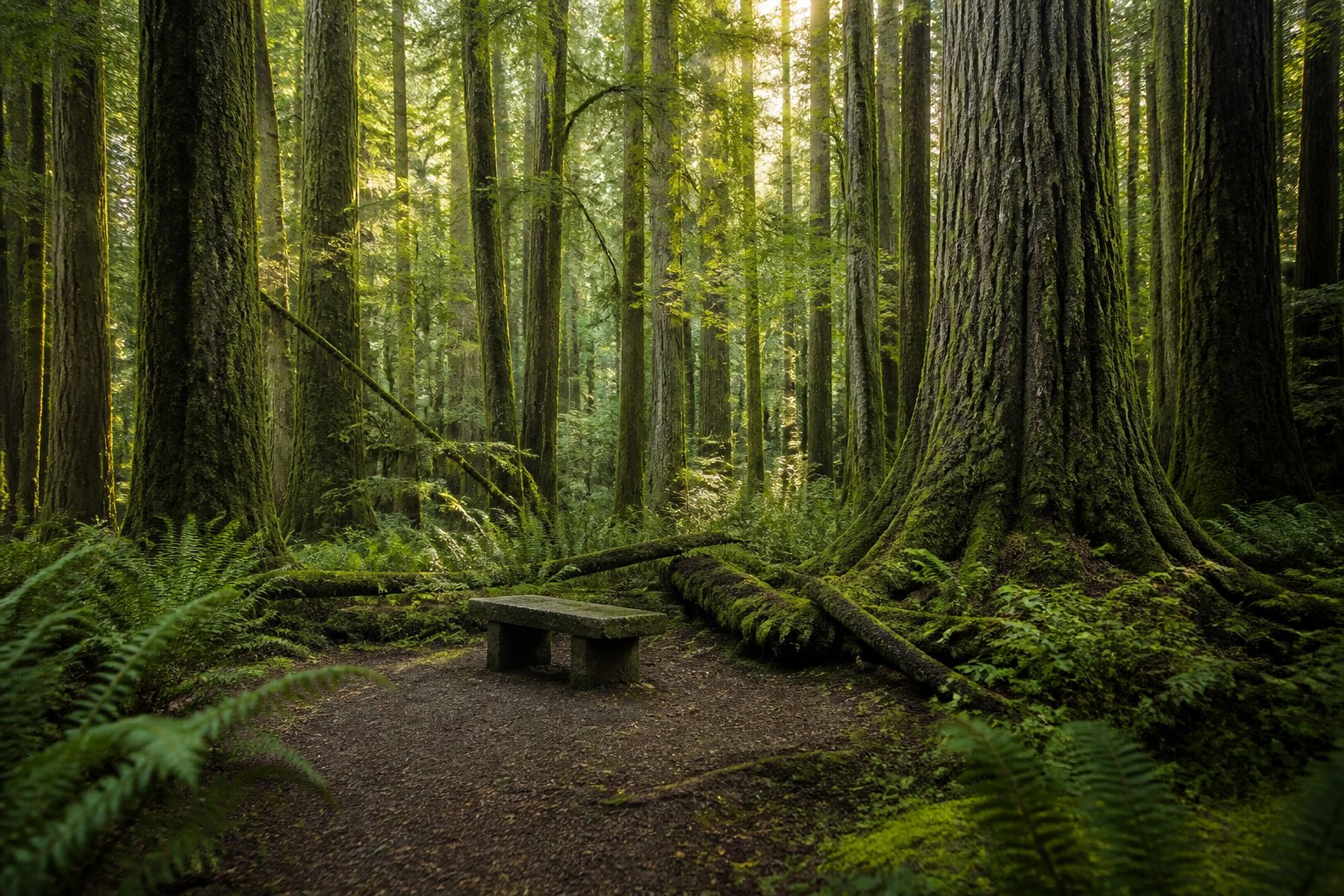
The first time most American readers heard the phrase “forest bathing” was probably around 2018, when a wave of magazine articles introduced the Japanese practice of shinrin-yoku to a Western audience. The articles were mostly accurate, if a little credulous, and the framing was familiar: an exotic Eastern wellness practice promising stress reduction and immune support to the burned-out modern reader.
Eight years later, the trend articles have faded, and something more interesting has taken their place. Forest bathing has been quietly absorbed into a much broader institutional apparatus. It shows up in clinical guidelines, in insurance pilots, in forest management plans, and in municipal park budgets. Few of these institutional adoptions describe themselves as forest bathing. But the underlying activity – deliberate, slow, multi-sensory time spent in a forest – has moved from the wellness fringe into something close to mainstream practice.
What the research actually shows
The early wave of articles often overstated the evidence. The boldest claims – cancer prevention, blood pressure regulation lasting for weeks – were extrapolated from small studies in specific populations. The more sober body of research that has accumulated since 2015 supports a narrower but still meaningful set of effects.
The clearest finding is on cortisol. Across a number of studies in Japan, Korea, and Europe, time spent walking slowly in a forested environment produces measurable reductions in salivary cortisol that persist for several hours afterward. The effect is real and reproducible, and it is larger than the effect produced by an equivalent walk in an urban park or along a busy waterfront.
The second finding is on subjective measures of mood, particularly in patients with mild to moderate anxiety. Multiple controlled studies have shown improvements in standard anxiety inventories after structured forest exposures, with effect sizes comparable to some commonly prescribed interventions. The effect appears to be dose-dependent: two hours produces a stronger effect than 30 minutes, and weekly exposure produces a stronger effect than monthly exposure.
The third finding is on cardiovascular biomarkers. The evidence here is mixed. Some studies show short-term reductions in blood pressure and heart rate variability improvements. The effects appear to be smaller than those for cortisol and mood, and the persistence beyond the day of exposure is unclear. The hype around long-term cardiovascular benefits is, on the current evidence, somewhat ahead of the data.
How clinics are using it
The institutional adoption of forest bathing in clinical settings has been driven mostly by primary care and behavioral health programs. A growing number of clinics in the U.S. Pacific Northwest, the upper Midwest, and parts of New England now include “park prescriptions” or equivalent referrals in their standard care for patients presenting with stress-related symptoms, mild depression, or post-acute recovery from cardiac events.
The Park Rx America initiative, which started in 2017 with a handful of pilot clinics, now lists more than 2,000 participating providers across the country. The mechanics vary by region. In some cases, the prescription is informational – a written recommendation handed to the patient with a list of nearby parks. In other cases, the patient is enrolled in a structured program that includes guided sessions with trained staff. The structured programs tend to show better adherence, but the informational referrals have lower marginal cost and reach more patients.
What makes the clinical adoption interesting is that it has happened largely without insurance reimbursement. Most of the participating providers are absorbing the time into routine visits. A handful of state Medicaid pilots have begun reimbursing for structured nature-based interventions, particularly for behavioral health, but the reimbursement pathway remains narrow. The fact that thousands of providers are doing the work anyway suggests that the practical clinical experience is favorable enough to justify the time even without billing codes.
Forest management catches up
The less visible institutional shift has been in forest management itself. State and federal forest agencies are increasingly designing trail networks and recreation areas with restorative use in mind. This sounds like a marginal change, and in budget terms it is. But the design implications are real.
A forest area built for restorative use looks different from one built for traditional recreation. The trails are shorter, with multiple loop options. The trailhead amenities are quieter – fewer interpretive signs, more bench seating, less prominent parking. The trail surfaces are softer, often with intentional grading to reduce ankle stress. The routing avoids road noise and high-traffic mountain biking sections. Some areas now include designated quiet zones where motorized equipment and group activities are restricted during certain hours.
The Olympic Peninsula has been experimenting with this approach since 2021. So have several state parks in Wisconsin, Vermont, and northern California. The Japanese model, which involves formally certified “forest therapy” trails, is influential but rarely copied directly. The American adaptations tend to be more loosely structured, more open to mixed use, and more dependent on quiet hours rather than formal certification.
The infrastructure question
The next phase of forest bathing’s institutional adoption is, on the current trajectory, going to be about infrastructure. Restorative forest use is most valuable to the people who have the least access to it. Urban residents, people with mobility limitations, and people without cars are exactly the population for whom the cortisol and mood benefits would be most consequential. They are also the population for whom existing forest areas are hardest to reach.
A growing number of municipalities have begun investing in what gets called “everyday nature” infrastructure: forested walking routes that connect housing areas to transit, small urban forests preserved or replanted within neighborhood scale, and accessible trail surfaces that work for wheelchairs and strollers. The investments are modest – usually in the low millions of dollars for a mid-sized city – but the per-capita reach is potentially much larger than the better-known wilderness programs.
Cities that have led on this infrastructure include Portland, Minneapolis, Madison, and several smaller cities in the Pacific Northwest and upper Midwest. The pattern in each case has been similar: a public health department, a parks department, and one or two local nonprofits collaborate on a multi-year plan to build out the network. The results are slow to appear but cumulative.
Why this is durable
Trends in wellness are notoriously fragile. They appear, they generate a few years of magazine coverage, and they fade. Forest bathing looked, in its early American phase, like it might follow that pattern. The reason it has not is that the underlying activity – walking slowly in a forest – is so old, so well-supported by independent research, and so cheap to provide that it has been able to outlast the specific cultural moment that introduced it.
What comes next is probably not more research. The basic evidence is settled enough. What comes next is more infrastructure, more clinical integration, and more careful attention to who can actually reach a forest in their normal week. None of this will be branded as forest bathing. Some of it will look, from the outside, like ordinary park planning. The Japanese term will probably fade from common use. The practice it pointed to will stick.

About Maya Bennett
Maya Bennett is an independent writer covering sustainability, climate innovation, outdoor culture, and the evolving relationship between technology and everyday life. Her work focuses on how modern communities adapt to environmental change through smarter design, conscious living, and emerging technologies. Over the past decade, Maya has contributed to publications and digital media projects focused on environmental awareness, travel, wellness, and future living trends. She is particularly interested in sustainable cities, regenerative tourism, clean technology, and the growing intersection between nature and innovation. When not writing, she spends time exploring coastal destinations, hiking trails, and conservation-focused communities around the world. Her reporting combines research-driven insights with a practical perspective on how environmental and technological shifts influence daily life.