Mycelium Networks and the New Science of Soil Resilience
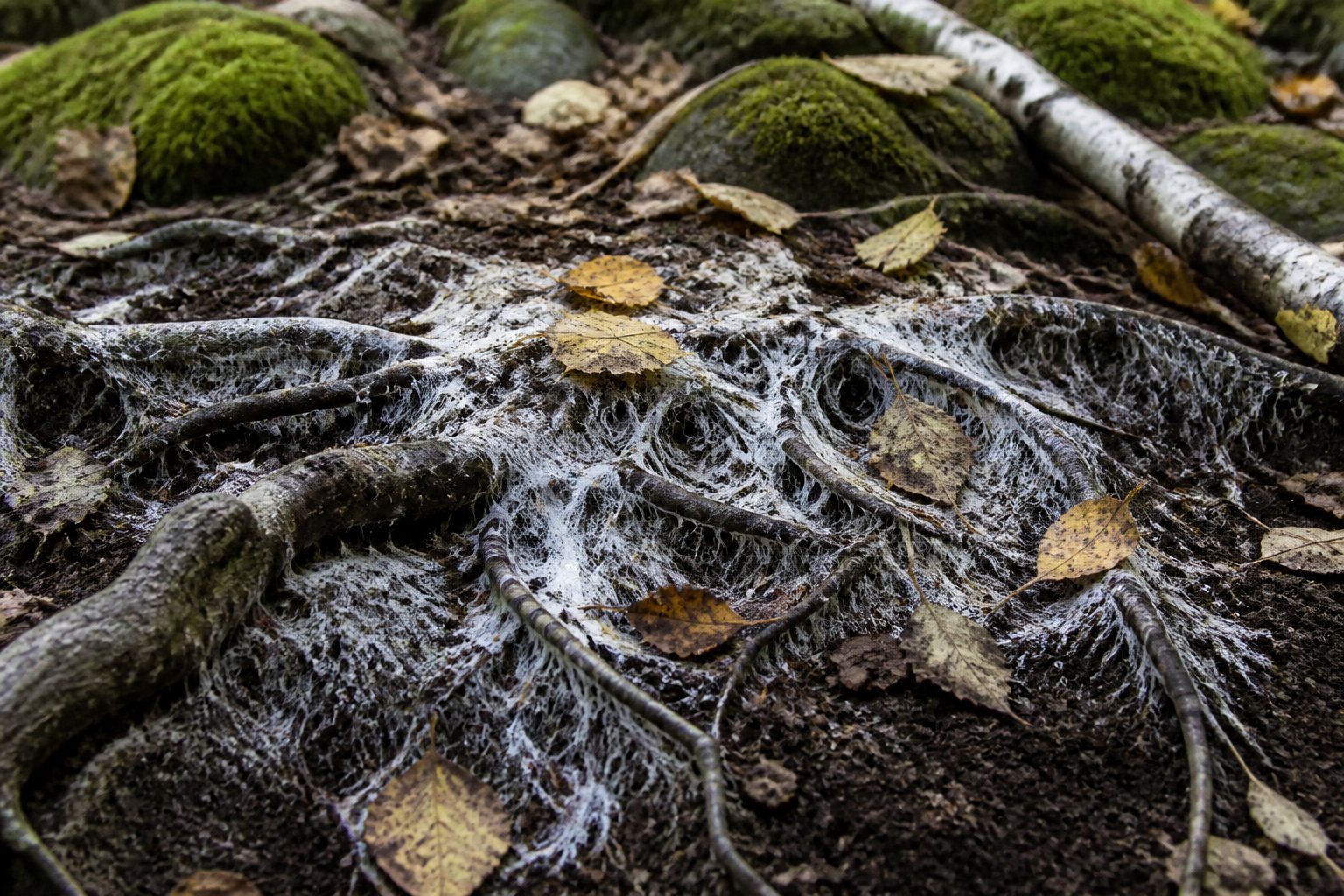
The phrase “wood-wide web” entered popular science writing around 2016 and has been doing heavy lifting ever since. The framing is appealing: a vast underground communication network through which trees share nutrients, warnings, and even something like care. Books, magazine articles, documentaries, and TED talks have promoted versions of this story to the point where most readers with any interest in ecology have absorbed it in some form.
The underlying science is real, but the popular framing has gotten significantly ahead of what the research actually supports. The relationship between mycorrhizal fungi and plant roots is, in fact, ecologically important. The specific claims about cooperative behavior, signaling between trees, and protective resource transfer are more contested than the popular accounts suggest. What is emerging from the more careful recent research is a picture that is less romantic and arguably more consequential for how we think about soil management, forest health, and agricultural resilience.
What the research actually shows
Mycorrhizal fungi form intimate associations with the roots of the vast majority of land plants. The relationship is generally mutualistic: the plant provides carbon to the fungus in exchange for improved access to water, phosphorus, nitrogen, and other nutrients. This basic relationship has been thoroughly characterized over the past century, and it is not in serious dispute.
The more recent research has focused on the broader network structure that mycorrhizal fungi create in soil. Individual fungal organisms can extend through soil over substantial distances, and a single fungal organism can be in association with multiple plants simultaneously. This much is empirically well-supported. The question is what flows through this network and whether the flows are usefully described as communication, cooperation, or other social terms borrowed from animal behavior.
The evidence for resource transfer between plants through mycorrhizal networks is mixed. There are documented cases of nutrient exchange between plants connected to the same fungal network. The exchanges, however, are not uniformly cooperative. In many documented cases, the fungal partner appears to be the active manager of the exchange, routing resources to maximize its own carbon supply rather than to benefit any particular plant. The popular framing of trees sharing through the network is somewhat at odds with this finding.
The evidence for chemical signaling between plants through mycorrhizal networks is even more contested. A handful of studies have suggested that defense-related chemical signals can travel through fungal connections from a damaged plant to a neighboring plant, prompting preemptive defensive responses. Other studies have failed to replicate these findings or have found the effects to be much smaller than initially reported. The current state of the evidence is that some kind of signaling probably occurs in some circumstances, but the strong claims about systematic communication networks are not well-supported.
What is well-supported
What is well-supported, and what has more practical importance, is the role of mycorrhizal networks in soil resilience and ecosystem stability. A healthy mycorrhizal community in soil performs several functions that are difficult or impossible to replicate through other means.
The first is nutrient cycling. Mycorrhizal fungi access pools of phosphorus and nitrogen that plant roots alone cannot efficiently reach. The total nutrient flux mediated by mycorrhizal networks in a typical forest soil is substantial, and the loss of those networks in disturbed soils has measurable effects on plant productivity that persist for years after the disturbance.
The second is water management. Mycorrhizal hyphae extend the effective volume of soil that a plant root system can access by an order of magnitude or more. In drought conditions, plants with intact mycorrhizal associations are typically more resilient than plants without them. The effect is particularly important in agricultural settings, where conventional tillage practices destroy mycorrhizal networks and remove this drought buffer.
The third is soil structure. Mycorrhizal hyphae produce a protein called glomalin that contributes to soil aggregation. Aggregated soils hold water better, resist erosion, and provide more habitable conditions for the broader soil biota. Soils with intact mycorrhizal communities tend to have better structure and higher organic matter content over time.
The agricultural implications
The agricultural implications of the more careful recent research are significant. Conventional tillage destroys mycorrhizal networks. Heavy applications of soluble phosphorus fertilizer suppress mycorrhizal colonization, because the plant invests less in the fungal partnership when nutrients are abundant in the soil solution. Fungicides applied for control of plant pathogens often have non-target effects on mycorrhizal communities. Each of these practices is widespread in conventional agriculture.
The cumulative effect is that most conventional agricultural soils have substantially impaired mycorrhizal communities compared to undisturbed soils nearby. The consequences are not immediately catastrophic – plants grow, yields are obtained, fertilizer inputs make up for the lost nutrient access – but the long-term effects on soil resilience are real. Soils with weak mycorrhizal communities are more vulnerable to drought, more prone to erosion, and more dependent on continuous external nutrient inputs.
The agricultural practices that support mycorrhizal communities are not exotic. Reduced tillage, cover cropping, diverse rotations, and careful management of phosphorus inputs all tend to support stronger mycorrhizal associations. None of these practices are new. Their adoption has been gradual and uneven, often driven by economic considerations rather than soil biology. The biology, however, is increasingly being recognized as an additional reason for adoption.
The forest management implications
In forest contexts, the implications are different but equally consequential. Mycorrhizal communities are particularly important during seedling establishment after disturbance. Clear-cut harvest can disrupt mycorrhizal networks in ways that slow regeneration for years. Forest management practices that retain some standing trees or that minimize soil disturbance tend to preserve more of the underlying fungal community, which supports faster and more diverse regeneration.
Several research groups have been working on what gets called “mycorrhizal inoculation” of disturbed sites: introducing native fungal communities to accelerate the recovery of soil biology. The results have been mixed, with some sites responding well and others showing little benefit from inoculation. The picture that is emerging is that local context matters enormously. A successful inoculation in one soil type and climate may have no effect on another. The science of restoration mycology is still in its early phases.
What this changes
The deeper change that the careful research is producing is not in any particular practice. It is in how soil biology is conceptualized. Soil is increasingly understood not as an inert substrate but as a living community whose composition and condition matters for productivity, resilience, and stability. The mycorrhizal network is one important component of that community, but it is not the only one. Bacteria, archaea, protists, nematodes, and a wide range of other organisms all play roles, and the interactions among them are not fully understood.
What this means practically is that the binary between “fertilized soil” and “natural soil” is too simple. A more useful framework distinguishes soils by the condition of their biological communities. Soils with intact, diverse, active communities perform differently from soils with degraded communities, even at the same nutrient levels. The performance difference shows up in drought resilience, in nutrient cycling efficiency, in carbon storage, and in pathogen suppression.
The popular framing of trees as wise communicators is probably going to fade as the more careful research becomes better known. What will remain is something less anthropomorphic but arguably more important: a recognition that the soil beneath our feet is doing complex biological work that we have only recently begun to understand, and that management practices which preserve this biological function tend to produce better outcomes than practices which assume the soil is just dirt. That is a less dramatic story than the wood-wide web. It is also one that is likely to have more lasting influence on how we manage the systems we depend on.

About Maya Bennett
Maya Bennett is an independent writer covering sustainability, climate innovation, outdoor culture, and the evolving relationship between technology and everyday life. Her work focuses on how modern communities adapt to environmental change through smarter design, conscious living, and emerging technologies. Over the past decade, Maya has contributed to publications and digital media projects focused on environmental awareness, travel, wellness, and future living trends. She is particularly interested in sustainable cities, regenerative tourism, clean technology, and the growing intersection between nature and innovation. When not writing, she spends time exploring coastal destinations, hiking trails, and conservation-focused communities around the world. Her reporting combines research-driven insights with a practical perspective on how environmental and technological shifts influence daily life.