Regenerative Tourism Is Replacing the Eco-Resort Model
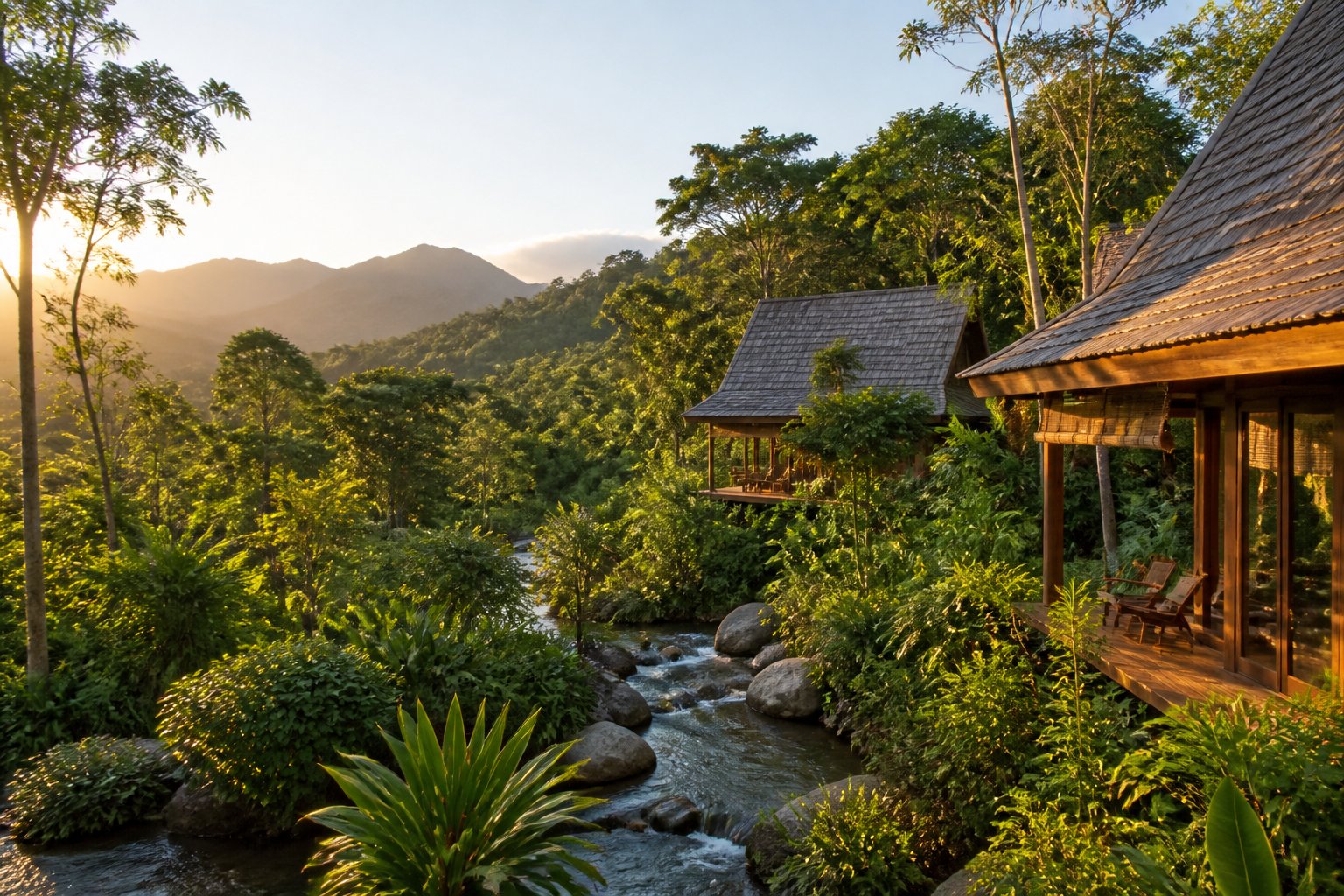
An eco-resort in Costa Rica took out a magazine ad in 2007 that summed up the original eco-tourism pitch as well as any single sentence. The headline read: “Stay here. Leave nothing behind.” The implied promise was that the resort had figured out how to host travelers without damaging the surrounding rainforest. The carbon was offset, the water was recycled, the staff was local, the food was organic. The traveler could enjoy the experience without guilt.
The same resort, under different ownership, ran a new campaign in 2024. The headline was different in a way that turned out to be substantive. “Stay here. Leave the forest better.” The shift from neutral impact to positive contribution is the cleanest statement of what the industry has started calling regenerative tourism, and it is a meaningful break from the eco-tourism model that preceded it.
What “regenerative” actually means
Regenerative tourism is a vague enough term that it has been applied to almost anything. The serious version of the concept, though, is fairly specific. A regenerative tourism operation, in the sense the term is now being used by planners and researchers, has three characteristics.
First, it generates measurable positive outcomes for the surrounding ecological system rather than simply minimizing harm. This means active restoration work – tree planting, watershed improvement, native species reintroduction – funded by tourism revenue and visible to the visitor. The work is not optional or peripheral. It is part of what the property is for.
Second, it integrates with the surrounding human community in a way that goes beyond local employment. Staff are local, but so are suppliers, decision-makers, and a substantial fraction of the ownership. The economic value of tourism revenue stays in the region rather than flowing out to corporate headquarters in another country.
Third, the visitor experience is structured to include some form of participation in the regenerative work. This can range from optional volunteer activities to more substantive immersive programs where visitors spend part of their stay working on restoration projects, learning local agriculture, or contributing to community efforts. The participation is real, not theatrical.
Where the model is being built out
The best-developed regenerative tourism networks are in New Zealand, Costa Rica, and parts of Patagonia. New Zealand has been particularly aggressive, with national tourism strategy documents that explicitly identify regenerative principles as the policy direction for the industry. Several of the country’s flagship lodges have transitioned away from the older eco-tourism model toward something measurably different.
The Lake Hawea Station property on the South Island is a frequently cited example. The land has been under active ecological restoration for the past decade, including significant reforestation of native bush, fencing of waterways, and reintroduction of native bird species. The lodge serves a small number of paying guests, and a portion of the revenue is directly tied to specific restoration projects on the property. Visitors can observe, participate, or ignore the restoration work depending on their preference. The fact that the work would continue regardless is part of what makes the model durable.
Costa Rica’s version of the model has been driven by a mix of private operators and the country’s well-developed conservation incentive structure. The Pago por Servicios Ambientales program, which compensates landowners for forest cover, provides a baseline of economic value that complements tourism revenue. The result is that landowners have multiple income streams from intact ecosystems, which changes the economic calculus for both restoration and development decisions.
What’s harder than it looks
Building a regenerative tourism operation is genuinely difficult. The capital costs are higher than for an eco-resort, because the property has to be restored before it can host visitors at full scale. The operating model requires sustained investment in ecological work that has long lead times and uncertain payoffs. The visitor experience has to be coherent enough that people pay a premium for it, but not so engineered that it feels manufactured.
The places that have done this well share a few characteristics. They have long-term ownership rather than short-term investor pressure. They have access to ecological expertise, either through staff or through partnerships with regional research institutions. They have a clear theory of what the surrounding system needs and a multi-year plan to deliver it. And they have a visitor pool that is willing to pay for a less polished, less predictable experience than a traditional resort offers.
The places that have done this badly have often confused regeneration with branding. A resort that plants a few trees per visitor and runs a press release is not running a regenerative operation. The distinction matters because the cumulative effect of weak versions is significant. Travelers who pay extra for a regenerative experience and find that it amounts to a few signs and a smoothie made with native fruit are not likely to pay the premium twice.
The economics of the premium
One of the more interesting findings from the past few years of research is that the price premium for genuinely regenerative properties is durable. Visitors who book these properties tend to come back, refer others, and pay rate increases without major resistance. The repeat customer rate at the best-known regenerative lodges is significantly higher than the industry average for comparable price points.
The economic logic is that the visitor is buying something different from what a conventional resort offers. They are buying a relationship with a specific place, a sense of contribution to something larger, and a memory that survives the trip in a different way than a beach vacation does. The premium reflects that difference, and visitors who value it are willing to pay it consistently.
What makes the model precarious is that the experience is hard to replicate at scale. The best regenerative properties are small. They cap visitor numbers below what their physical infrastructure could support. They limit growth in ways that protect the underlying ecological work. This is a feature, not a bug, but it means the model is not going to displace mainstream resort tourism on volume.
What might come next
The most likely trajectory is not a single dominant model. Mass-market resorts will continue to exist. Eco-resorts in the older sense will continue to operate, mostly with somewhat better practices than they had a decade ago. And a growing set of regenerative properties will occupy the higher end of the market, with influence on industry standards that is disproportionate to their size.
The influence shows up in adjacent areas. Larger resorts have begun adopting some of the practices pioneered at smaller regenerative properties: deeper integration with local supply chains, more explicit ecological investment, more transparent reporting. The standards are not yet uniform, and there is a real risk that the language of regeneration gets diluted as it spreads. But the underlying movement is more substantive than the eco-tourism wave that preceded it.
For travelers, the practical implication is that the words “eco” and “sustainable” on a property’s marketing materials no longer mean very much on their own. The properties doing the more serious work tend to be specific about what they are doing, name the projects, and let visitors see them. A property that cannot answer the question of what its restoration plan is, in concrete terms, probably does not have one. That single question has become a reasonable filter for travelers who want their money to do what the brochure suggests.

About Maya Bennett
Maya Bennett is an independent writer covering sustainability, climate innovation, outdoor culture, and the evolving relationship between technology and everyday life. Her work focuses on how modern communities adapt to environmental change through smarter design, conscious living, and emerging technologies. Over the past decade, Maya has contributed to publications and digital media projects focused on environmental awareness, travel, wellness, and future living trends. She is particularly interested in sustainable cities, regenerative tourism, clean technology, and the growing intersection between nature and innovation. When not writing, she spends time exploring coastal destinations, hiking trails, and conservation-focused communities around the world. Her reporting combines research-driven insights with a practical perspective on how environmental and technological shifts influence daily life.