Why Repair Cafés Are Becoming Permanent Fixtures in Small Cities
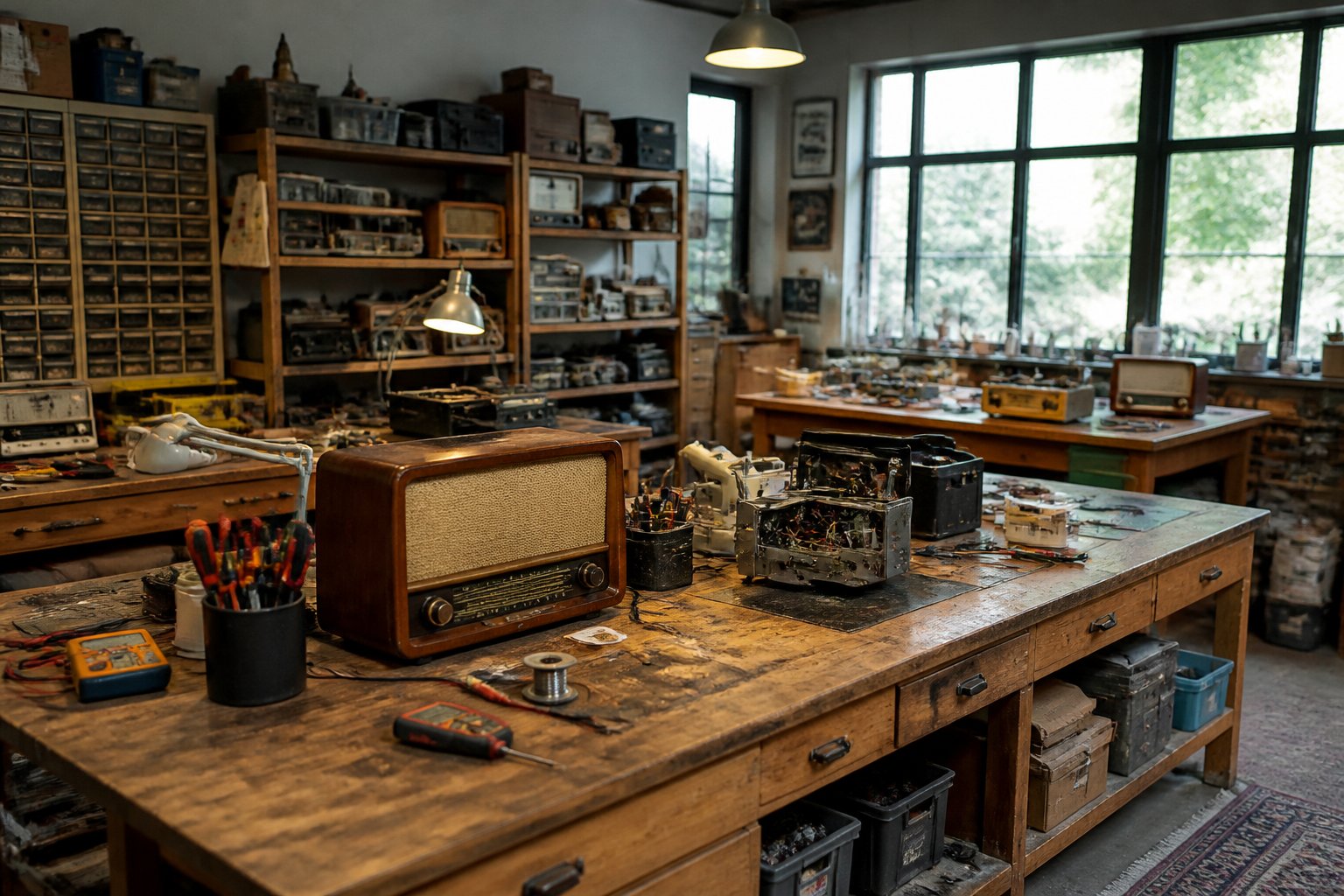
The first repair café in the United States opened in Palo Alto in 2012, modeled on a Dutch concept that had been quietly spreading across northern Europe for the previous three years. The original idea was simple: get volunteers with practical repair skills into a public room with tools, invite the public to bring in broken household items, and try to fix things that would otherwise be thrown away. The events were monthly. The tone was casual. The expectations were modest.
Fourteen years later, repair cafés in the U.S. have become something different. The monthly church-basement event still exists, and it has spread to hundreds of cities. But the more interesting development has been the slow institutionalization of repair cafés in mid-sized cities, where they have evolved into permanent workshop spaces with regular hours, paid staff, and meaningful operating budgets. The shift from volunteer event to small civic institution has been gradual, and the lessons from the cities where it has worked are now coming into focus.
What changed
Three things have moved repair cafés from occasional volunteer events toward permanent infrastructure. The first is the steady documentation of what they actually divert from the waste stream. A regular repair café event of moderate size – say, a Saturday afternoon with eight volunteer fixers and 40 attendees – typically repairs between 30 and 50 items. Most of these items would have been discarded if not repaired. Over the course of a year, even a monthly event diverts hundreds of items from the waste stream. A weekly operation with a dedicated workspace can divert thousands.
The second is the recognition that the value of repair cafés extends beyond the waste diverted. A repair event teaches skills, builds social connection, provides intergenerational contact, and reduces the isolation that affects many older residents who have repair expertise but no longer have a workplace context for using it. These secondary benefits have made repair cafés attractive to municipal recreation departments, senior services agencies, and community development programs that might otherwise have no obvious connection to waste reduction.
The third is the policy environment. Several states and a growing number of municipalities have adopted right-to-repair legislation that makes repair more practical for a wider range of products. Manufacturer cooperation, where it exists, has expanded the range of items that can realistically be repaired by community volunteers. The European Union’s eco-design rules, which have pushed manufacturers toward repairable product designs, have spillover effects in U.S. markets and are slowly improving the repairability of the product mix that shows up at repair café events.
What permanent repair cafés look like
The institutionalized version of a repair café typically includes a dedicated workspace of perhaps 1,200 to 2,500 square feet, with workbenches, tool storage, basic test equipment, and supply of common consumables. The space is open during regular hours – often three to five days a week – with paid coordination staff and a roster of volunteer fixers organized by specialty. Residents can drop in during open hours or schedule appointments for more complex repairs.
The economic model is generally mixed. A typical permanent repair café operates as a project of a nonprofit organization, with funding from a combination of municipal contracts, foundation grants, modest user contributions, and occasional revenue from sales of repaired items donated by residents who chose not to keep them after repair. The total operating budget for a small permanent installation is usually in the range of $80,000 to $200,000 per year, depending on hours, staff, and space costs.
The volunteer roster is the operational core. A working repair café needs a deep enough bench of skilled volunteers that at least two or three with relevant specialties are available during any open shift. Most permanent installations have between 30 and 80 active volunteers, with a much smaller core of regulars who anchor the schedule. Volunteer recruitment and retention have generally been less of a bottleneck than the operating budget, but it requires sustained attention.
Where the model is established
The cities where permanent repair café operations have been most successful tend to share a few characteristics. They are mid-sized – usually 30,000 to 200,000 residents – with enough population density to support regular foot traffic but small enough that a single facility can serve a meaningful fraction of the city. They have active municipal sustainability programs that have provided seed funding, recurring contracts, or in-kind support. They have a critical mass of retired skilled workers whose expertise is relevant to the kinds of items residents bring in.
Portland, Maine, has had a permanent repair café for five years. Boulder, Colorado, has one that has been operating for nearly seven. Madison, Wisconsin, Asheville, North Carolina, and several smaller cities in the upper Midwest and Pacific Northwest have established their own. The model has spread more slowly in larger cities, where space costs are higher and where competing demands on municipal sustainability budgets often crowd out the relatively small contracts that anchor a permanent repair café.
The skill question
One of the underappreciated dimensions of the repair café movement is what it reveals about the distribution of practical skills across generations. The volunteer fixers at most repair cafés are disproportionately older. They learned to repair things in workplaces and home settings that no longer exist in the same form. They know how to test capacitors, diagnose motor failures, repair sewing machines, and salvage chairs with broken joints.
These skills are not being transmitted to younger generations at anything like the rate at which the current volunteer cohort acquired them. This is partly because manufactured goods are now designed in ways that resist repair, and partly because home and school environments where these skills used to be acquired have largely disappeared. The implications are not immediately visible, but they will be: in 15 to 20 years, the volunteer pool that currently sustains the repair café movement will have aged out, and the question of whether the skills can be transmitted to a new cohort will determine whether the movement endures.
Several repair cafés have responded by developing explicit teaching programs alongside the repair events. The teaching is informal – an older volunteer working with a younger participant on a specific repair – but the cumulative effect is to transmit a body of practical knowledge that would otherwise be lost. Some of the more developed permanent repair cafés have begun running structured workshops aimed at teenagers and young adults, with mixed but mostly encouraging results.
What’s likely to come
The trajectory for repair cafés over the next decade is probably continued steady growth, with the model becoming more recognizable as a normal feature of mid-sized cities. Several state-level networks are now coordinating municipal and county repair programs, sharing best practices, and lobbying for policy support. The infrastructure for the model is becoming more visible and more legible to potential funders.
For most residents of a city that has a permanent repair café, the practical experience is unremarkable. The toaster that would have been thrown away gets fixed. The lamp that needed a new switch starts working again. The bicycle gets a tune-up. The cumulative effect over years is real but rarely calls attention to itself.
What makes the institutionalization interesting is not any particular repair. It is that a small civic institution has emerged in the past decade that did not exist in the same form before. It performs work that the formal economy mostly does not do anymore. It draws on labor and knowledge that the formal economy has largely stopped valuing. And it generates outcomes – diverted waste, transferred skills, social connection – that the formal economy does not measure well. The repair café in this sense is not just about repair. It is a small example of what local civic infrastructure can look like when it is built around practical work rather than around services delivered to passive recipients. That is a quieter story than most of what gets called sustainability. It is probably also one of the more durable.

About Maya Bennett
Maya Bennett is an independent writer covering sustainability, climate innovation, outdoor culture, and the evolving relationship between technology and everyday life. Her work focuses on how modern communities adapt to environmental change through smarter design, conscious living, and emerging technologies. Over the past decade, Maya has contributed to publications and digital media projects focused on environmental awareness, travel, wellness, and future living trends. She is particularly interested in sustainable cities, regenerative tourism, clean technology, and the growing intersection between nature and innovation. When not writing, she spends time exploring coastal destinations, hiking trails, and conservation-focused communities around the world. Her reporting combines research-driven insights with a practical perspective on how environmental and technological shifts influence daily life.